From Ukraine to a Multi-Front War: How Global Markets Are Pricing the Ultimate Escalation
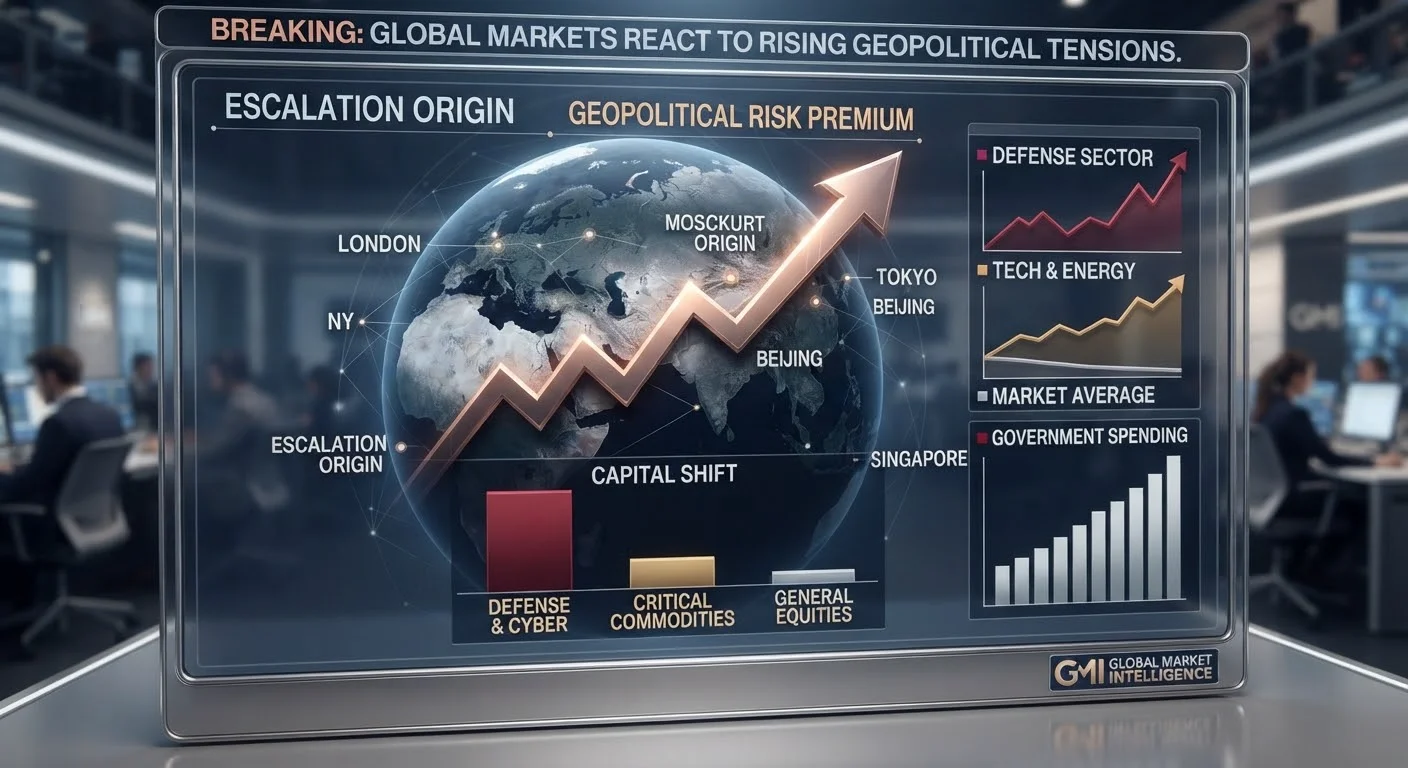
Executive Market Summary
As superpower tensions escalate toward a multi-front WW3 scenario, we analyze how global markets, defense budgets, and capital flows are shifting...
As tension between the world’s two superpowers has become more intense in recent months and has moved into full-scale conflict on many fronts worry about the possibility of major economies collapsing has reached the highest levels of decision-making. Will the global financial system collapse in a never-ending sequence of failures. Will it endure in a broken new system? Investors are asking a scary question: Will major economies survive a final escalation or is the global financial system moving into an endless economic void?
Even though predicting what will happen in geopolitics is very risky looking at where smart money's going tells a very clear story. Money does not get scared; it makes calculations. To find out what a full-scale World War would mean for assets we can look back at the economic problems that appeared since the war in Ukraine started and compare how government budgets changed then with the huge increase in defense production that is happening now.
---
The Breaking Point: From Local Trouble to Big Changes
When the fighting in Ukraine first started global markets saw it as a problem that caused quick increases in natural gas, wheat and oil prices followed by strong actions by central banks to fight rising prices. However the real effect of that war was not short-term problems; it was a complete change in how countries think about security.
Over the few years the usual way of dealing with international issues has changed completely. Supply chains are now seen as weapons energy routes are seen as points and the talk between NATO members and countries like Russia has become more intense. This has made what used to be considered the possible situations into real risks that are being planned for. According to data from the Stockholm International Peace Research Institute (SIPRI) spending on military around the world reached a record high of $2.887 trillion showing years of increases.
For markets this tension acts like a hidden tax on growth. Uncertainty causes problems. Long-term fighting changes how defense is handled. The main financial difference now is not whether risks are increasing. Who is taking advantage of the changes.
---
Money Moving: Who Increased Spending and Where Is the Cash Going?
When there is a lot of instability around the world money moves away from risky consumer areas and into stronger areas. Looking at how the economy responded during the years of the war in Ukraine and comparing it with what is happening now shows a big change in how things are structured:
- **Higher Military Spending:** In the stages of the war in Ukraine European NATO countries tried to meet the 2% GDP target. Now that goal has completely changed. Under alliance agreements that aim for 3.5% to 5% of GDP for defense and security European military spending has gone above what it was after the Cold War. Major countries like Germany have increased their buying budgets by digits each year.
- **The Russian Financial Shift:** At the time state-controlled economies have fully prepared for war. Russias military spending went over $190 billion, which is 7.5% of its GDP and makes up most of its budget. This strong government support has made defense manufacturing the driver of industrial production protecting the countrys finances through high energy income even though there are big international sanctions.
- **The Growth of Cybersecurity. Ai Defense:** Investments are not about old equipment like metal, shells and heavy armor. A lot of money is going into new technologies like automated battlefield tools AI for detecting threats, drone groups and secure systems that can handle quantum computing. Companies that work with software and tools that can be used for both civilian and military purposes are getting a lot of money from investors that used to go to startups in the consumer tech world.
- **Safe Places for Resources and Changing Supply Lines:** Energy, rare earth minerals and farming have seen a lot of investment. Unlike the short-term panic over resources that happened in the days of the war in Ukraine global supply chains have changed for good. Countries are now buying more of the minerals building extra supply lines and bringing manufacturing closer to home which is keeping the prices of industrial resources high and steady.
---
Market Comparison: The War in Ukraine Shock vs. The Multi-Front World War Three Prices
When looking at how markets have reacted, the difference between the initial shock of the war in Ukraine and the pricing of a multi-front conflict is stark. During the initial market shock of 2022 to 2023, sentiment was defined by acute panic, rapid energy spikes, and short-term equity sell-offs, whereas current pricing reflects deeper institutional adaptation, systemic risk pricing, and a structural overweighting of defense. Furthermore, military spending has shifted from emergency supplementary packages and minor budget adjustments into institutionalized, multi-year procurement supercycles and systemic alliance expansions. Capital deployment has evolved similarly, transitioning from reactive, short-term plays in oil and gas into proactive allocations targeting cyber-defense, autonomous technology, and long-term supply chain resilience. Finally, the burden on state budgets has transitioned from shock-driven emergency measures—such as Ukraine operating at roughly 40 percent of its GDP and Russia altering its fiscal baseline—into permanent, militarized fiscal policies adopted across competing global superpowers.
---
Getting Through the Deep Hole
Will the increase in fighting lead to a financial hole that markets cannot come back from? A complete system collapse is a bad risk that no investment plan can fully protect against. However history since the start of the war in Ukraine shows that money changes in the worst situations.
Markets are preparing for a world that is broken and full of tension not for destruction. For investors the lesson is clear: safety, in the coming years will not come from ignoring the situation but from supporting the areas—advanced military technology, cyber protection and important supply chain resources—that governments have to pay for no matter what happens.