Escalating Houthi-Saudi Tensions: How Global Markets, Crude Oil, Gold, and Shipping Lanes Will React
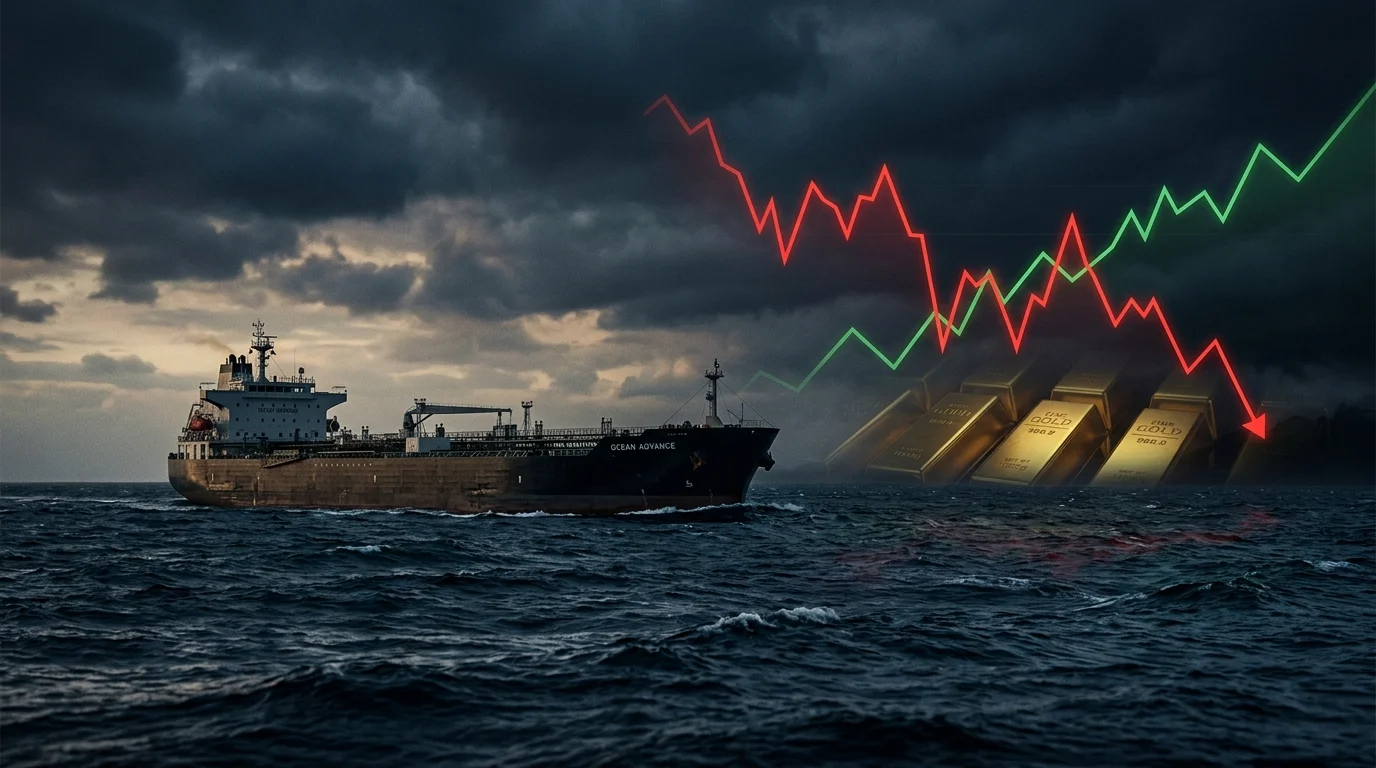
Executive Market Summary
Renewed military friction between Houthi forces and Saudi Arabia risks reigniting Red Sea chokeholds and Gulf energy threats. We break down the...
Renewed geopolitical saber-rattling between Ansar Allah (Houthi forces) and Saudi Arabia has once again cast a long shadow over the Persian Gulf and the Bab el-Mandeb strait. For macro allocators and commodity desks, any reignition of hostilities between Yemen and Riyadh is not simply an isolated regional conflict—it represents an immediate supply-side supply-chain shock capable of resetting inflation expectations and interest rate paths across the globe.
Below is an institutional breakdown of how key asset classes, raw commodities, and global trade corridors are positioned to react if this geopolitical flashpoint escalates into kinetic exchanges.
---
1. Crude Oil: The Immediate Return of the War Risk Premium
The energy complex represents the primary transmission mechanism between Gulf conflict and global financial contagion.
What to Watch:
- **Asymmetric Infrastructure Vulnerability:** Saudi Arabia’s eastern oil processing hubs (such as Abqaiq and Khurais) and southern export pipelines remain high-priority targets for long-range drone and cruise missile salvos. Even minor infrastructure disruptions or near-misses force insurers to reprice risk overnight.
- **Price Dynamics:** In the event of confirmed strikes against Saudi Aramco installations or coastal tankers, Brent crude would immediately price in a **$10 to $18 per barrel geopolitical risk premium**, pushing spot prices rapidly toward the **$95–$108 range**.
- **OPEC+ Spare Capacity Dilemma:** While Saudi Arabia and the UAE hold significant offline spare production capacity, that capacity is rendered irrelevant if maritime exit corridors (Strait of Hormuz and the southern Red Sea) are contested or blocked by anti-ship ballistic munitions.
---
2. Gold & Precious Metals: The Flight to Sovereign Safe Havens
Gold remains the purest structural hedge against geopolitical tail risk and fiat currency debasement driven by war-induced supply bottlenecks.
What to Watch:
- **The Flight to Safety:** Gold spot prices typically react within minutes of escalatory military strikes. Physical bullion and institutional ETF inflows accelerate as central banks and macro hedge funds rotate capital away from risk-sensitive credit and emerging market debt.
- **Price Targets:** A direct escalation threatening Saudi sovereignty or Gulf energy transport would likely push bullion upward toward **$2,800–$2,950/oz**, with secondary tailwinds spilling into silver and platinum.
- **Inflationary Hedging:** Beyond the initial fear trade, an extended regional conflict drives up petrochemical and fertilizer costs, reigniting cost-push inflation. Investors systematically increase allocations to bullion to protect purchasing power against higher-for-longer sovereign yield curves.
---
3. Shipping & Logistics: The Red Sea Chokehold & Freight Rate Explosions
The southern Red Sea and the Bab el-Mandeb Strait handle roughly **12% of total global seaborne trade** and **nearly 30% of global container traffic**.
What to Watch:
- **Cape of Good Hope Diversions:** Sustained missile and drone threats against commercial vessels force major global carriers (such as Maersk, Hapag-Lloyd, and MSC) to permanently divert vessels around the southern tip of Africa. This adds **10 to 14 transit days** per Europe-Asia voyage.
- **Freight Rate & War Risk Spikes:** Spot container rates on Shanghai-to-Rotterdam and Asia-to-Mediterranean routes typically triple under active maritime confrontation. War risk insurance premiums for vessels daring to traverse the Red Sea jump from fractional basis points to prohibitive multi-million dollar single-voyage penalties.
- **Supply Chain Bottlenecks:** The resulting vessel turnaround delays reduce effective global container vessel capacity by 15% to 20%, generating downstream delays across European manufacturing and retail inventory restocking cycles.
---
4. Equity Markets & Sovereign Debt: The Stagflationary Squeeze
Global equities—already sensitive to benchmark sovereign yields—face a dual squeeze under an escalating Houthi-Saudi theater.
Sector Divergence:
- **Outperformers:**
- **Defense & Aerospace:** Defense contractors and munitions suppliers experience immediate order backlog surges.
- **Traditional Energy Majors:** Upstream oil and gas producers benefit directly from elevated crude netback margins.
- **Maritime Tanker Operators:** Clean and dirty tanker operators (e.g., VLCCs) capture windfall day-rates as tonne-mile demand surges due to elongated sailing routes.
- **Underperformers:**
- **Airlines & Consumer Discretionary:** Jet fuel spikes and squeeze on disposable consumer income compress operating margins across travel and retail.
- **European Manufacturing:** High energy import dependency leaves European industrials vulnerable to renewed margin compression.
---
Key Takeaway for Market Participants
The market does not trade military events based on political morality; it trades them on **maritime throughput, barrel counts, and insurance costs**.
If the Houthi-Saudi front expands:
- **Long Energy & Bullion** remains the primary baseline macro hedge.
- **Long Tankers & Logistics Freight Derivatives** captures the direct consequence of maritime route diversions.
- **Short Long-Duration Equities & Emerging Market FX** mitigates the stagflationary headwinds of higher commodity inputs paired with stickier central bank policy rates.
*Disclaimer: This analysis is for educational and news reporting purposes only and does not constitute financial, investment, or trading advice.*