WTI Crude Oil Prices Fall to $95.00 as S&P 500 Reaches 7431.46
Executive Market Summary
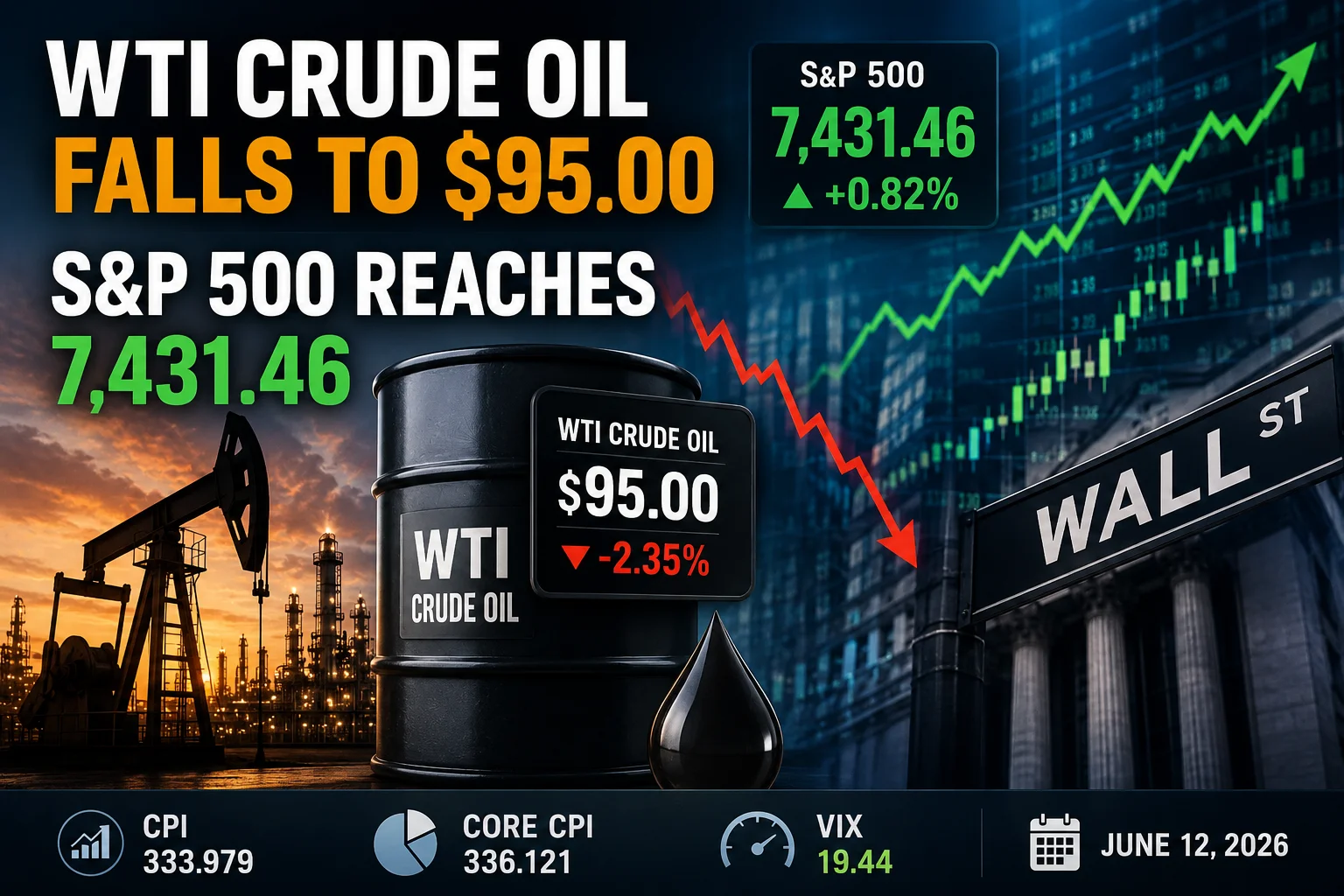
WTI crude oil eased to $95 per barrel while the S&P 500 climbed to 7,431.46, highlighting a market environment where investors remain optimistic...
Introduction
WTI crude oil prices slipped to $95 per barrel while the S&P 500 advanced to 7,431.46, reflecting a market environment where investors remain focused on economic resilience and corporate earnings growth. The combination of softer oil prices and rising equities is being closely monitored for its potential impact on inflation, consumer spending, and business profitability.
Why Oil Prices Matter
Crude oil remains one of the most important inputs for the global economy. Changes in energy prices influence transportation costs, manufacturing expenses, and consumer purchasing power.
A decline in oil prices can provide relief for businesses and consumers by reducing fuel costs. Lower energy expenses may also help ease inflationary pressures, giving central banks greater flexibility when considering future monetary policy decisions.
Equity Markets Continue Higher
The S&P 500's move to 7,431.46 reflects continued investor confidence in the broader economy. Strong corporate earnings, advances in artificial intelligence, and expectations for stable economic growth have supported equity valuations throughout recent months.
Many investors view falling oil prices alongside rising stock prices as a favorable combination because it can improve profit margins for companies while reducing costs across multiple sectors.
Key Economic Indicators
| Metric | Value |
|---|---|
| WTI Crude Oil | $95.00 |
| S&P 500 | 7,431.46 |
| Consumer Price Index (CPI) | 333.979 |
| Core CPI | 336.121 |
| VIX | 19.44 |
While inflation remains above historical averages, market volatility remains relatively contained. The VIX reading of 19.44 suggests investors are monitoring risks but have not shifted into a defensive posture.
Sectors to Watch
Several sectors could be influenced by the current market environment:
- Airlines and transportation companies may benefit from lower fuel costs.
- Consumer discretionary businesses could see stronger spending if energy expenses decline.
- Energy producers may face pressure if crude prices continue to move lower.
- Technology companies remain a key driver of broader market performance.
Investors are closely watching whether lower oil prices become a temporary pullback or the beginning of a larger trend.
Market Outlook
The relationship between oil prices, inflation, and equity markets will remain a major focus for investors. If crude prices continue to ease while economic growth remains stable, markets could view the development as supportive for both corporate earnings and consumer activity.
However, any unexpected shift in inflation, geopolitical developments, or economic growth expectations could alter the current market narrative.
Conclusion
WTI crude oil's decline to $95 per barrel and the S&P 500's advance to 7,431.46 highlight a market balancing moderating energy costs with continued optimism around economic growth. For investors, the coming weeks will provide important clues about inflation trends, earnings performance, and the sustainability of the current rally.
Disclaimer: This article is for informational purposes only and does not constitute financial advice. Always conduct your own research before making investment decisions.